
Baby teeth are temporary – but that does not make them unimportant. Baby bottle tooth decay is one of the most common dental problems in young children and can develop faster than most parents imagine. What is even more worrying is that in the early stages it is almost invisible to the naked eye.
The good news is that, in most cases, it can be prevented. A few good habits, applied consistently from an early age, make the difference between a healthy smile and repeated visits to the dentist.
What baby bottle tooth decay is and why it happens
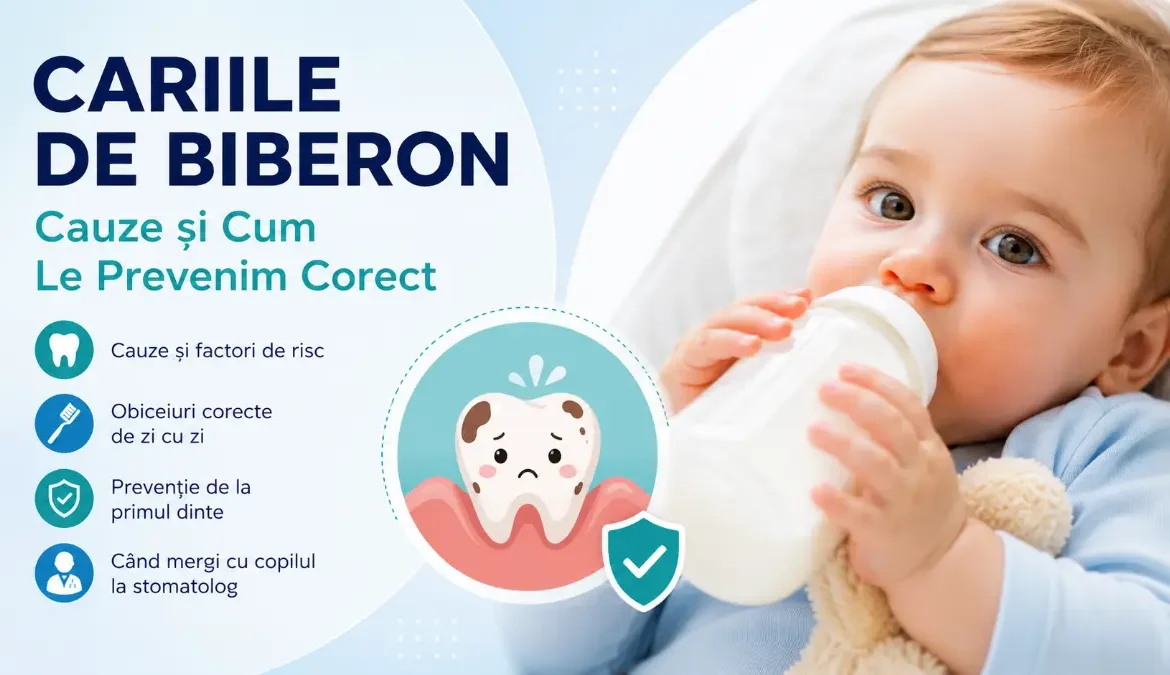
Baby bottle tooth decay – also known as Early Childhood Caries (ECC) – is damage to the baby teeth caused by prolonged contact between the enamel and sugary liquids: milk, infant formula, fruit juice or sweetened tea.
Bacteria in the mouth (especially Streptococcus mutans) ferment sugars and produce acids that attack the enamel. In young children this process is faster for two reasons: the enamel of baby teeth is thinner than that of permanent teeth, and contact with the sugary liquid is often prolonged – especially during sleep, when saliva flow decreases, reducing the mouth’s natural ability to neutralize acids.
Baby bottle tooth decay can appear as soon as the first teeth come through – sometimes even before the age of one.
Why baby teeth matter
A common misconception: “they fall out anyway, there is no point worrying”. In reality, baby teeth have essential functions that you should not underestimate:
- they hold the space for the permanent teeth that will come through later;
- they make chewing possible and therefore good nutrition in the first years of life;
- they contribute to speech development – each tooth plays a part in pronouncing sounds;
- they influence the child’s confidence in their own smile and in social interactions.
Untreated decay in a baby tooth can quickly progress to infection, pain or a dental abscess. Losing a baby tooth too early can cause the neighboring teeth to drift and lead to alignment problems in the permanent teeth.
What baby bottle tooth decay looks like: signs to watch for
Early diagnosis makes treatment much simpler. Here are the signs that may appear, in order of severity:
- dull white spots on the enamel, usually near the gum line – this is the early stage, in which the damage can be stopped with preventive measures and appropriate monitoring;
- yellow or brown discoloration on the surface of the teeth;
- visible cavities – holes in the enamel or dentin;
- sensitivity to sweet, hot or cold;
- pain or irritability when chewing.
👉 If you notice white spots or any change in color on your child’s teeth, it is important to rule out early-stage baby bottle tooth decay. Do not put off the checkup. The earlier decay is detected, the less invasive the treatment.
Habits that encourage tooth decay
Some everyday habits significantly increase the risk:
- falling asleep with a bottle – prolonged contact of milk or juice with the teeth during sleep is the main risk factor;
- a pacifier dipped in honey or sugar – a seemingly harmless habit, but with direct consequences for the enamel;
- frequent nighttime breastfeeding without cleaning the teeth afterwards – breast milk contains lactose, which contributes to the same mechanism;
- sharing spoons or tasting food with the child’s spoon – passing on saliva transmits decay-causing bacteria from adult to child;
- insufficient or no oral hygiene in the first years.
How to prevent baby bottle tooth decay – practical steps
Prevention starts before the first tooth appears. Here is a simple, effective plan:
- Wipe your baby’s gums with a damp gauze pad after every feeding, even before the teeth come through;
- Brush the teeth with a soft toothbrush and a small amount of fluoride toothpaste as soon as the first tooth appears;
- Do not let your child fall asleep with a bottle – if they need comfort at night, offer water;
- Gradually reduce juice and sweetened drinks, replacing them with water;
- Do not share spoons and do not blow on your child’s food to cool it.
Good oral hygiene established early is a highly effective form of long-term prevention.
When is the right time for the first dental checkup?
The international recommendation is clear: the first dental checkup should take place around the age of one, or six months after the first tooth comes through – whichever comes first.
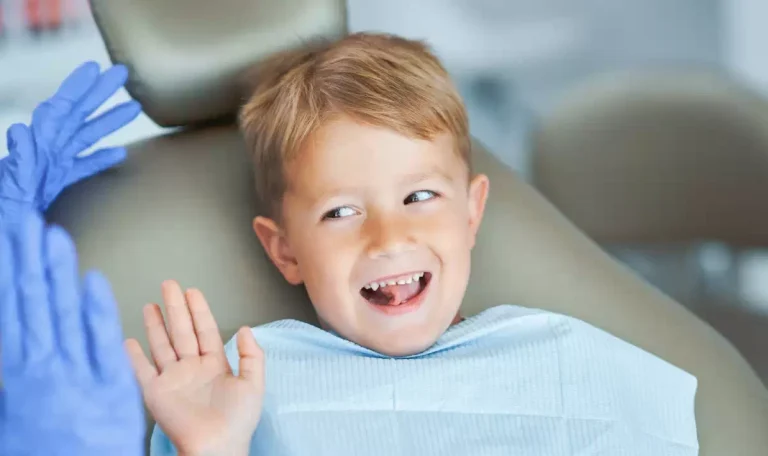
The aim is not treatment but assessment and education. The dentist checks the condition of the teeth and gums, identifies individual risk factors and gives recommendations tailored to your child. An early visit also helps your child get used to the dental office – without anxiety and without negative associations.
As your child grows and the baby or permanent molars come through, the dentist may also recommend fissure sealing as an additional preventive measure – quick, without anesthetic and effective in areas that are hard for a toothbrush to reach.
Frequently asked questions (FAQ)
From what age can baby bottle tooth decay appear?
Baby bottle tooth decay can appear as soon as the first baby teeth come through, which usually happens at around 6 months. The more frequent and prolonged the harmful habits (falling asleep with a bottle, a pacifier dipped in honey), the higher the risk. There is no “safe” age – prevention should start with the first tooth.
Is baby bottle tooth decay treated, or are the teeth extracted?
It depends on how severe the damage is. Early lesions can be treated with fluoride application or fillings. Advanced decay that affects the pulp needs more complex treatment or, in severe cases, extraction. That is why early diagnosis is essential – the smaller the lesion, the simpler and less traumatic the treatment for the child.
Can breast milk cause tooth decay too?
Breast milk contains lactose, a natural sugar that can contribute to tooth decay when decay-causing bacteria are present. The risk increases significantly when nighttime breastfeeding is frequent and is not followed by oral hygiene. This is not about stopping breastfeeding, but about maintaining appropriate oral hygiene and keeping a close eye on dental health.
How do I clean the teeth of a baby who will not cooperate?
It is normal for babies to resist at first. A few practical tips: choose a time when your child is calm, use a small toothbrush with soft bristles, sing or play while you brush, and turn the routine into a positive habit. At the consultation, the pediatric dentist can demonstrate the technique suited to your child’s age and temperament.
Are decay-causing bacteria passed from parents to children?
Yes. Streptococcus mutans, the main bacterium involved in tooth decay, can be passed on through saliva – when parents test the temperature of food with the child’s spoon, blow on food or use the same cup. Avoiding these habits reduces the risk of early bacterial colonization in the child.
Why do some children get tooth decay even though their parents brush their teeth?
Brushing is essential, but it is not the only factor. How often sugar is consumed, the quality of the enamel (influenced by genetics or by possible deficiencies during pregnancy), the bacterial flora and saliva flow all contribute to the risk. A visit to a pediatric dentist can identify individual factors and personalize the prevention plan.
Conclusion – prevention starts early
Baby bottle tooth decay is not inevitable. It is largely the result of habits that can be corrected – sometimes very simply, if we act in time.
If your child’s first teeth have already come through, or if you want to know how to protect them properly at this stage, a consultation at Dental CATTED gives you clear answers and a plan tailored to your child’s age and needs.
Book your child’s first visit – the earlier, the easier.
📞 Call +40 733 22 88 28
📩 Or fill out the contact form in the sidebar and we will call you back as soon as possible.
📍 Pipera, Str. Emil Racoviță 26
Dental CATTED Dental Clinic – Pipera