

“Does my child need braces? And if so, from what age?” – these are the questions parents ask most often, especially when they notice crooked teeth or a habit that doesn’t seem to go away on its own. The good news is that the right moment is not guesswork – there are clear recommendations, based on how a child’s teeth and jaws develop.
Braces for children do not necessarily mean brackets on every tooth, as many parents imagine. Sometimes they mean a simple appliance worn for a few months, at an age when intervention can make a real difference. Not every child needs braces right away, but an early assessment can establish the right time.
What interceptive orthodontics is and why age matters
A first orthodontic consultation is recommended at around the age of 7, even though most children still have baby teeth at that point. Not because they need braces right away, but because at this age the orthodontist can identify problems with jaw growth or with the eruption of the permanent teeth early on.
This kind of early intervention is called interceptive orthodontics. It may be recommended to guide jaw growth, correct harmful habits or create the space needed for the permanent teeth to come through properly. The idea behind it is simple: some problems are much easier to correct while the jawbones are still developing than once growth has finished. Intervening at 7–8 years old can simplify, or even remove, the need for complex treatment later on, in the teenage years.
Signs that a child may need braces
A few signs deserve your attention, whatever your child’s age:
- crowded, blocked or incorrectly positioned teeth;
- an incorrect bite – the upper teeth in front of the lower ones or the other way around;
- persistent mouth breathing (through the mouth rather than the nose);
- difficulty chewing or speaking;
- losing baby teeth too early or too late;
- habits such as thumb-sucking or tongue thrusting, if they persist beyond the age of 5–6.
👉 None of these signs automatically means that braces are needed right away. It means that a timely assessment can clarify whether and when treatment becomes necessary.
The role of baby teeth in future alignment
Many parents underestimate the importance of baby teeth because they are going to fall out anyway. In reality, they hold the space needed for the permanent teeth that will come through later.
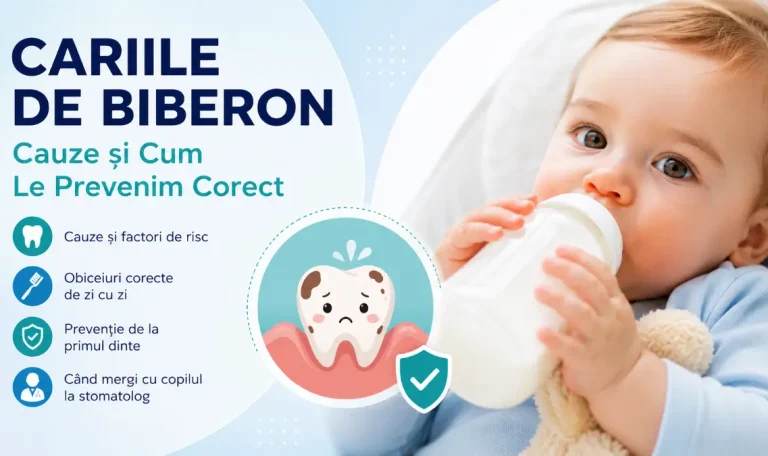
When a baby tooth is lost too early – because of advanced decay or an injury – the neighboring teeth can drift into the empty space, complicating the eruption of the permanent tooth that follows. Untreated baby bottle tooth decay is one of the most common causes of this early loss – one more reason why early prevention matters.
The opposite situation can be just as problematic: when a baby tooth stays in place long past the normal age, “shark teeth” can appear – the permanent tooth comes through behind the baby tooth, which has not fallen out in time. In both cases, an early orthodontic assessment helps anticipate the problem, sometimes even before it becomes visible.
Removable or fixed appliances – what suits which age
The type of braces recommended for a child depends directly on the child’s stage of development, not only on the problem identified.
Removable appliances are often used between the ages of 6 and 12, in the interceptive orthodontics phase. They can be taken out, which makes hygiene easier, and they are effective for correcting habits or creating space for the permanent teeth.
The palatal expander is recommended to widen a narrow upper jaw and works better before puberty, while the jawbones are still flexible enough to respond to treatment. It is recommended only when there is an orthodontic indication and after the development of the upper jaw has been assessed. Used at the right age, it can prevent the need for more complex surgery in adulthood.
Fixed braces, with metal or ceramic brackets, are most often recommended once most of the permanent teeth have come through, which often happens at around 11–13 years old, when precise control of the final alignment is needed.
The exact choice is always made by the orthodontist, case by case, not according to a fixed age rule.
What happens at the first orthodontic consultation
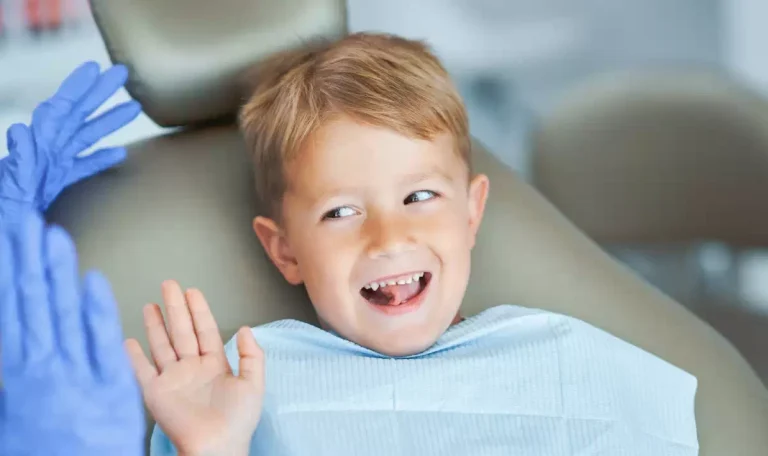
The first visit to the orthodontist does not automatically mean having braces fitted. The consultation does not require anesthesia; its purpose is to assess how the teeth and jaws are developing. It usually includes an oral examination, X-rays – if needed – and an open discussion with you and your child about what might come next.
If your child’s age and clinical situation justify treatment, the dentist draws up a personalized treatment plan, explaining the right type of appliance and the estimated duration. If not, your child simply enters a program of regular monitoring, as part of the general care provided through children’s dentistry – with no pressure to start treatment before it is really needed.
How much do braces for children cost?
The price varies with the type of appliance chosen (we explained separately how much braces cost, by type). The figures below are a guide and may vary depending on the recommended treatment plan:
- Removable appliance / arch: 1,500 RON;
- Palatal expander: 1,700 – 5,000 RON, depending on the type of anchorage;
- Metal fixed braces / arch: 3,100 RON;
- Ceramic fixed braces / arch: 3,500 RON;
- Retention aligner / retainer: 500 RON.
An exact estimate for your child’s case can only be given after the consultation, once the dentist has decided on the type of appliance and the length of treatment.
Frequently asked questions (FAQ)
At what age should a child have their first orthodontic consultation?
The generally accepted recommendation is at around the age of 7, even though most children still have baby teeth at that point. The orthodontist can identify problems with jaw growth or tooth eruption early on, without this necessarily meaning that braces are needed right away.
What does interceptive orthodontics mean?
It is a form of early intervention, carried out while the child’s jaws are still developing. The aim is to correct or simplify problems which, if not treated in time, could require much more complex orthodontic treatment in the teenage years or in adulthood.
My child sucks their thumb – do they need braces?
Not necessarily, especially if the habit goes away on its own before the age of 5–6. If it persists beyond this age, it can affect the position of the teeth and the shape of the jaw, and an orthodontic assessment helps establish whether treatment is needed.
How much do braces for children cost?
The price depends on the type chosen – a removable appliance costs 1,500 RON per arch, and metal fixed braces 3,100 RON per arch. Palatal expanders vary depending on the type of anchorage used. An exact estimate is given after the child’s clinical assessment.
Do braces hurt children?
At first, your child may feel slight discomfort or tenderness after the braces are fitted or adjusted, but this is temporary and can be managed with ordinary children’s painkillers. Most children adapt quickly, especially if the treatment is explained in a way they understand.
What happens if a baby tooth falls out too early?
The neighboring teeth can gradually drift into the empty space, which can complicate the eruption of the permanent tooth that follows. In these cases, the dentist may recommend a space maintainer – a small fixed or removable device that keeps the space open until the permanent tooth comes through.
If I wait until the teenage years, is it too late?
Not necessarily too late, but you may miss the window in which some problems are easier to correct. Certain treatments – such as widening the upper jaw with a palatal expander – are much more effective before puberty. Putting off the assessment does not rule out treatment later, but it may mean a more complex approach than would otherwise have been needed.
The right moment is set by an assessment, not by guesswork
There is no single “correct” age for braces for children – there is a right moment for each individual situation, established after a careful assessment. Sometimes, treatment started at the right time can considerably simplify later treatment.
Book your child’s first orthodontic consultation and find out whether and when it is the right time for braces.
📞 Call +40 733 22 88 28
📩 Or fill out the contact form in the sidebar and we will call you back as soon as we can.
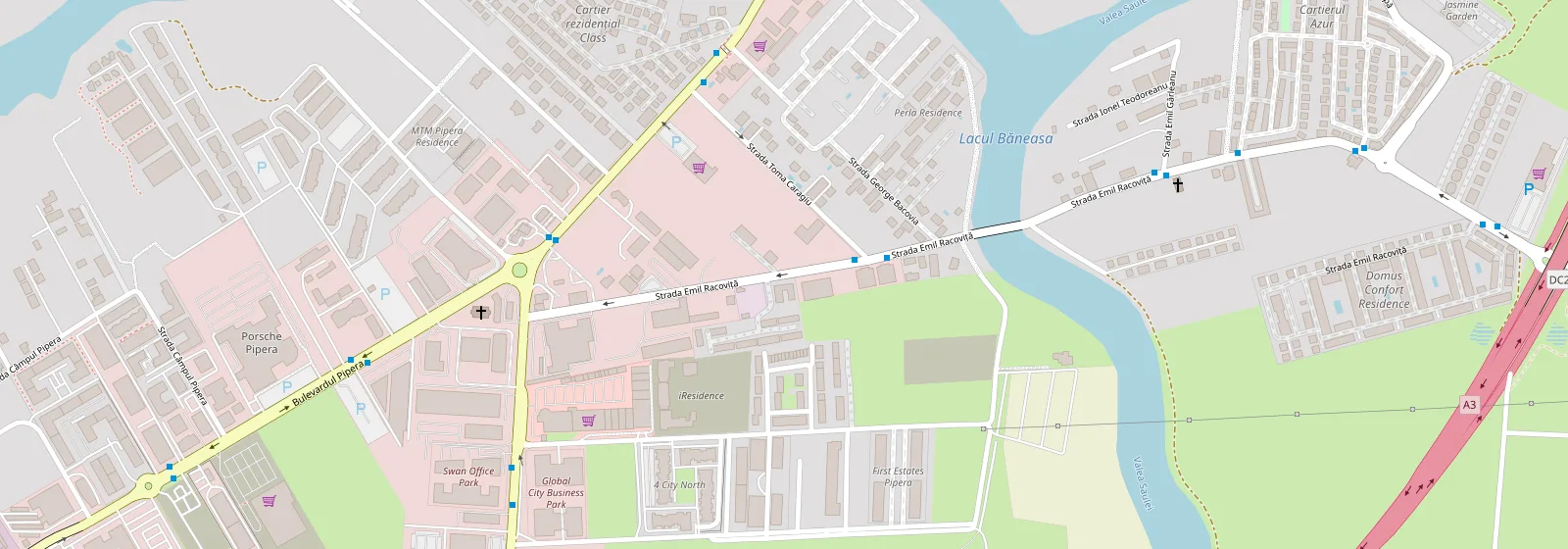
📍 Pipera, Str. Emil Racoviță 26
Dental CATTED Dental Clinic – Pipera