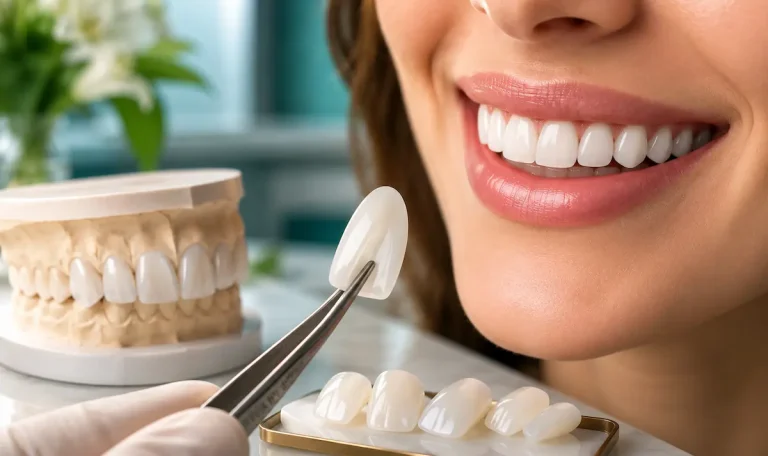


You notice them mostly in photos or in the bathroom mirror under bright light: a brownish shadow near the gumline, a yellowish streak between your front teeth, a tooth that looks darker than its neighbors. Brushing harder doesn't necessarily remove them, and the question comes naturally: is it just discoloration or something more serious?
When stains appear on your teeth, the cause matters, because it determines what can be done. Many are surface deposits that professional dental cleaning removes.
Tooth stains: on the surface or inside the tooth
Dentists divide stains into two broad categories, and the difference explains why some disappear after a cleaning and others don't:
- surface stains are pigments and deposits that cling to the enamel, from coffee, tea, red wine, tobacco or tartar;
- stains inside the tooth are in the enamel or dentin and are linked to the way the teeth formed, to an injury, to a cavity or to changes that come with age. Some respond to whitening, others don't, and sometimes the two types overlap.
Coffee, tea, tobacco and tartar: surface stains
Coffee, black tea, red wine and smoking can leave a brownish or yellowish film over time, more visible near the gumline and between the teeth. Those are harder spots for your toothbrush to reach, and the plaque left behind can mineralize and turn into tartar. Its rough surface holds on to pigments even more easily.
Long-term use of certain chlorhexidine mouthwashes can also leave brown stains, which can be removed at the clinic.
Tartar can no longer be removed with a toothbrush. During a professional cleaning, scaling and Airflow work together: the first removes tartar, while the second uses a fine jet of water, air and powder to clean plaque and stains from hard-to-reach areas.
When the stain comes from inside the tooth
Some stains have nothing to do with what you eat or drink:
- fluorosis – excess fluoride in childhood, while the teeth were forming, mostly leaves whitish spots or lines in mild forms, while more severe forms can also cause yellowish or brown stains;
- certain antibiotics (tetracycline), taken while the teeth were forming, can stain them with gray, yellowish or brown bands;
- an injury – a tooth that darkens, sometimes months after trauma, may signal a problem with the tooth's nerve;
- old fillings – their edges can become stained, and sometimes a cavity develops underneath them;
- age – enamel gradually gets thinner, and the more yellowish dentin underneath shows through more.
When a brown stain may be a cavity
A brown stain in the grooves of your molars or between your teeth doesn't automatically mean a cavity. It may be a simple stain, an old cavity that has stopped progressing, or an active cavity that is getting worse. At home, with the naked eye, you can't tell the difference.
It's worth booking an appointment sooner if the stain gets bigger or darker, if a small pit appears, if the tooth becomes sensitive to sweets, cold or heat, or if your floss keeps catching in the same spot.
At your consultation, the dentist examines the tooth and, if needed, recommends an X-ray. Likewise, a chalky white spot near the gumline may be early demineralization, but not every white spot means a cavity.
What can be done, depending on the cause
- For surface stains, a professional dental cleaning is usually the first step. It removes buildup, but it doesn't change the natural color of the tooth. At Dental CATTED, a complete professional cleaning (scaling, polishing, Airflow and fluoride treatment) costs 400 RON.
- For teeth that look yellowish overall, professional teeth whitening can lighten the shade, and the result depends on the starting color and the cause of the discoloration. You can read about its safety in our article on teeth whitening and enamel. Fillings, crowns and veneers don't whiten, so the result is planned with them in mind.
- For stains inside the tooth, the solution depends on the cause and on how deep and widespread the discoloration is. Sometimes whitening is enough; other times the dentist recommends other techniques, composite restorations or veneers.
- For a tooth that has darkened after an injury, the tooth's nerve is evaluated first, even if it doesn't hurt. The treatment and the color correction are chosen based on the findings.
👉 Before any cosmetic treatment, the dentist determines what kind of stain you have. Otherwise, whitening may make some stains more noticeable instead of fading them.
How to keep stains from coming back
- brushing twice a day with fluoride toothpaste, plus flossing or using interdental brushes;
- rinsing with water after coffee, tea or wine, which helps remove drink residue;
- quitting smoking, which stains teeth and promotes tartar buildup;
- checkups and professional dental cleanings at the interval set by your dentist: for many patients, about every 6 months, and for smokers often more frequently.
Frequently asked questions (FAQ)
Do whitening toothpastes remove stains?
They help mainly with light surface stains, because they contain polishing particles or agents that loosen pigments. However, they don't change the color inside the tooth and they don't remove tartar. Use them according to the instructions and avoid brushing hard, which can contribute to tooth wear over time.
Can I remove stains at home with lemon or activated charcoal?
It's not recommended. Lemon and vinegar are acidic, and activated charcoal and homemade mixtures can be abrasive. They can wear down enamel and make your teeth more sensitive, without addressing the cause of the stains.
Do stains come back after a professional cleaning?
A professional cleaning removes existing deposits, but surface stains can form again over time, especially if you often drink coffee or tea or if you smoke. Your dentist sets the interval until your next cleaning based on how quickly deposits build up in your case.
Why has just one tooth darkened?
It may be due to an old injury, a large filling with stained margins, a cavity, or a root canal treatment done in the past. It's worth getting a checkup, because only an examination can show the cause.
First the cause, then the treatment
Many stains on your teeth are surface deposits that a professional dental cleaning can remove. When the stain comes from inside the tooth or may be a cavity, the treatment is chosen after the dentist determines the cause.
Book a consultation to find out what kind of stains you have and what can be done in your case.
📞 Call 0733 22 88 28
📩 Or fill out the contact form in the sidebar and we will call you back as soon as possible.
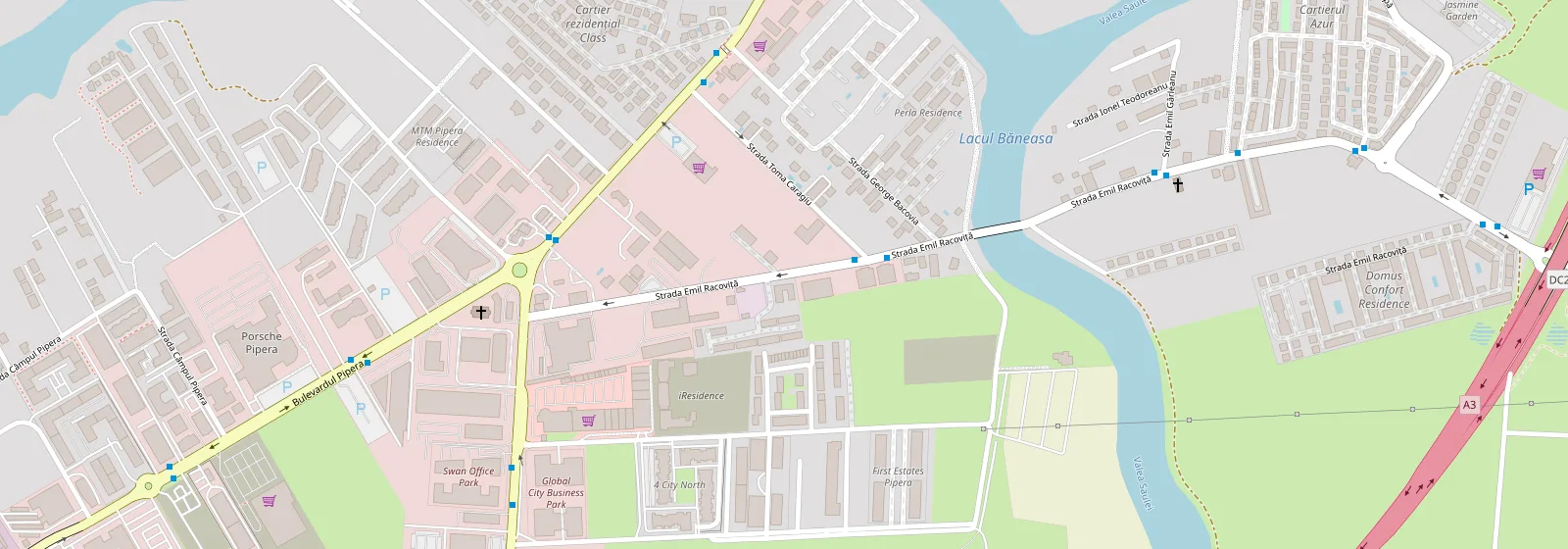
📍 Pipera, Str. Emil Racoviță 26
Dental CATTED Dental Clinic – Pipera