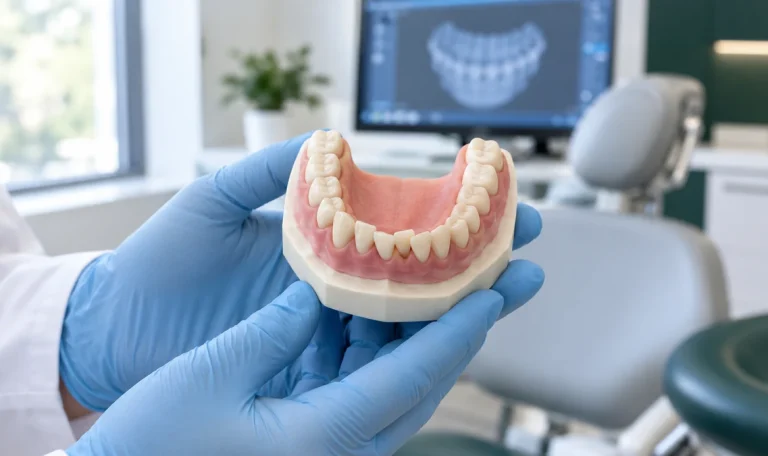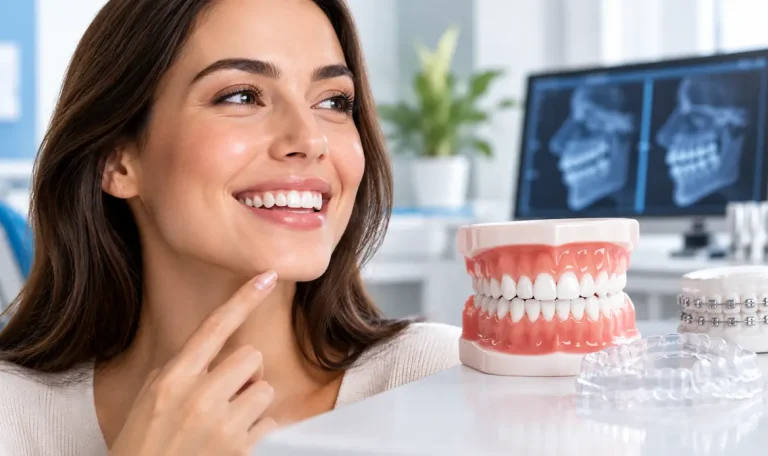


A great many adults notice at some point that their teeth do not fit together “quite as they should” when they bite. An incorrect bite is not just an aesthetic detail — it can affect the way you chew, the way your teeth wear and even the comfort of your temporomandibular joint (the joint between the lower jaw and the skull).
In this article you will find 4 simple signs that show whether it is time for an orthodontic assessment, and 5 types of incorrect bite that dentists often see in adults.
Signs that you need an orthodontic assessment
If you recognize any of the signs below, an assessment by an orthodontist can clarify your situation.
1. Uneven tooth wear
The front teeth look shorter, more worn down or more “jagged”, while others remain almost untouched. This usually happens when the pressure of the bite is distributed incorrectly.
2. Pain or discomfort in the temporomandibular joint
Clicking, popping, tension in the morning, or locking when you open your mouth — all of these may indicate that the joint is overloaded because of incorrect alignment of the teeth and jaws.
3. Visible crowding or gaps between the teeth
The teeth overlap, rotate or move apart. Besides the aesthetic aspect, crowding encourages plaque buildup, and gaps that are too wide affect stability.
4. Difficulty chewing or speaking
Food that gets caught between the teeth, a feeling that “the bite doesn’t fit” or slight distortions of certain sounds may signal an occlusion problem.
5 common types of incorrect bite in adults
| Type of bite | Description | Visible signs | Long-term risks |
|---|---|---|---|
| 1. Open bite | The upper and lower teeth do not touch at the front when you close your mouth | Vertical gap between the incisors | Difficulty biting, affected speech |
| 2. Crossbite | Some upper teeth sit behind the lower ones | Subtle facial asymmetry | Increased wear, joint tension |
| 3. Deep bite | The upper teeth overlap the lower ones excessively | The lower incisors may touch the gum behind the upper teeth. | Gum recession, trauma |
| 4. Protrusion | The front teeth are pushed forward | “Buck teeth”, lips that are hard to close | Risk of fractures, aesthetic concerns |
| 5. Crowding | The teeth do not have enough space | Overlapping, abnormal positions | Decay and gum inflammation develop more easily |
📌 These types can occur together. Only an orthodontist can determine your exact situation after a clinical and radiological assessment.
Is it too late to correct your bite as an adult?
Not at all. Orthodontic treatment can be effective at any age thanks to modern technology:
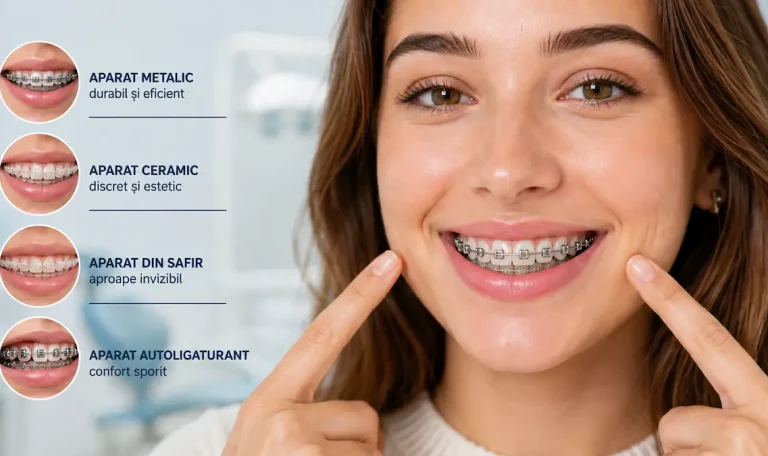
- Fixed braces (metal, ceramic or sapphire)
- Clear aligners (a discreet and comfortable solution)
- Digital planning techniques and regular monitoring
Age is not a barrier. Most treatments for adults are effective, safe and well tolerated.
Frequently asked questions
1. Can I wear braces if I have crowns or bridges?
In many cases, yes. The orthodontist will check compatibility.
2. Does correcting the bite help reduce headaches?
It may reduce the tension associated with an incorrect occlusion, but it does not replace a neurological assessment.
3. Is orthodontic treatment painful?
Only temporary discomfort after adjustments — easily manageable.
4. How long does treatment take?
It depends on the type of bite. The initial assessment gives you a realistic timeframe.
5. If I have only one of the 4 signs, do I need braces?
Not necessarily. In mild cases, minor corrections may be enough.
Book an appointment now
An incorrect bite does not correct itself. If you have noticed any of the signs above, an orthodontic assessment can give you clarity and a plan tailored to your situation.
👉 Book a consultation at Dental CATTED by calling us at +40 733 22 88 28 or by filling out the contact form to get a full diagnosis and treatment options suited to your age, lifestyle and aesthetic goals.