
You look in the mirror and notice that your front teeth overlap, one is slightly rotated, and your floss always gets stuck in the same spot. These are typical signs of crowded teeth, one of the most common alignment problems in both children and adults.
The good news is that crowding can be corrected at almost any age. However, how space is made for the teeth and how long orthodontic treatment takes depend on how severe the lack of space is and what causes it.
What crowded teeth means
Teeth are crowded when the dental arch doesn't have enough room for all of them. To fit, some teeth move out of line, rotate, or overlap their neighbors.
Orthodontists usually divide crowding into three degrees:
- mild – one or two teeth slightly out of alignment, sometimes visible only up close;
- moderate – several rotated or overlapping teeth, with areas that are hard to clean;
- severe – the lack of space is significant, and some teeth erupt outside the arch or remain partially blocked.
The degree matters, because it determines how space can be gained.
Why crowded teeth happen
Most often, it comes down to a mismatch between the size of the teeth and the size of the jaws. Tooth shape and size are inherited, so crowding often shows up in several members of the same family.
Other common causes:
- losing a baby tooth too early – the neighboring teeth can tilt into the gap, leaving no room for the permanent tooth;
- baby teeth that don't fall out on time – the permanent tooth erupts next to them, outside the dental arch;
- certain childhood habits, such as prolonged thumb sucking, which can affect the shape of the dental arches;
- age-related changes – in adults, the lower front teeth can gradually become crowded, even if they were straight during the teenage years.
Wisdom teeth are often blamed, but the evidence does not show a clear link between them and crowding of the front teeth. Whether they need to come out is decided separately, based on their position and the clinical indications.
Why they are worth correcting, and not just for your smile
Overlapping teeth create corners that your toothbrush and floss have a hard time reaching. Plaque builds up more easily there, and the risk of cavities between teeth and gum inflammation can increase.
Depending on the case, crowding can also affect how your teeth meet when you close your mouth. A correct bite distributes chewing forces evenly. If you notice uneven wear or discomfort when chewing, it is also worth reading about the signs of an incorrect bite.
👉 Not every case of mild crowding needs to be treated right away. Your dentist will tell you whether it is a functional problem or purely cosmetic, and the decision is yours.
How space is made for the teeth
For teeth to line up, they need space. The orthodontist chooses the method based on the degree of crowding, your age and the shape of your face:
- interproximal reduction (reshaping between teeth) – a small amount of enamel is removed in a controlled way from the side surfaces of certain teeth, only when the procedure is suitable for the case;
- Expanding the dental arch – in children, an appliance called a palatal expander can widen the upper jaw when it is too narrow; whether and when this treatment is indicated depends on the child's development and the problem identified;
- Moving teeth within the arch – the appliance can tip or gently shift the teeth to make better use of the existing space;
- Extracting some teeth – in severe crowding, the dentist may sometimes recommend removing a few teeth, usually premolars, so the rest can be aligned.
The plan is made after an examination, digital models of your teeth and, when indicated, imaging tests.
Book a consultation at Dental CATTED
Fixed braces or clear aligners
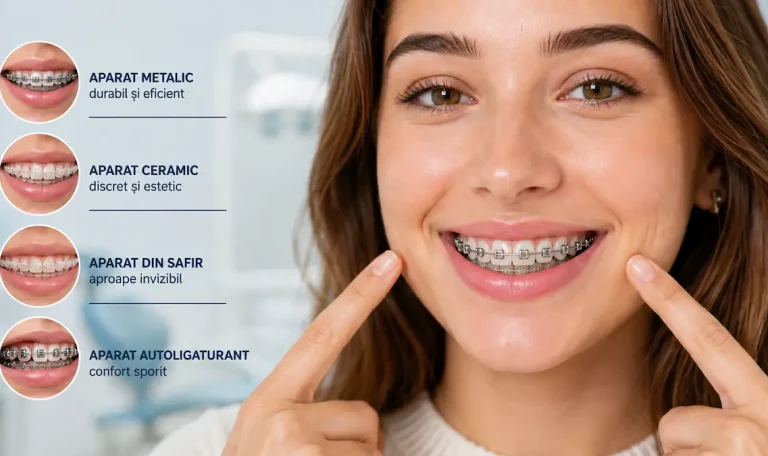
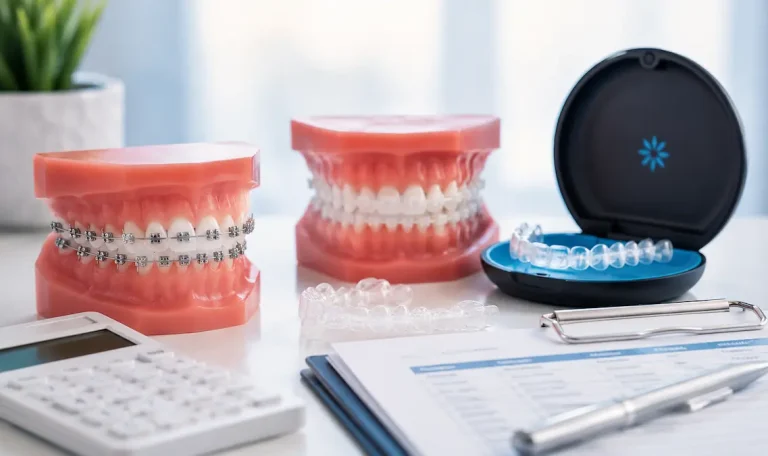
The actual alignment is done with fixed braces (metal, ceramic or sapphire) or with clear aligners, such as Spark. Neither option is “better” in general:
- fixed braces can offer more precise control over certain complex tooth movements;
- aligners are discreet and come out for meals and brushing, but they only work if you wear them as long as your orthodontist recommends;
- many cases of mild and moderate crowding can be treated with either option, based on your orthodontist's recommendation.
For children, the first orthodontic consultation is recommended around age 7. Sometimes, early intervention can guide growth and reduce the need for more complicated corrections later on.
Veneers are not a substitute for alignment: with crowded teeth, orthodontic treatment is usually recommended first, so that extensive tooth reduction isn't needed.
After alignment: retention
Teeth tend to drift back toward their original position, especially in the first few months after the braces come off. That's why retention is part of the treatment: a wire bonded to the inner surface of the teeth, an aligner-style retainer worn at night, or both.
Your orthodontist will decide how long you need to wear it. Many patients wear a retainer long term, because teeth can shift throughout life.
Frequently asked questions (FAQ)
My lower teeth became crowded after 30. Is that normal?
It happens fairly often. With age, the lower front teeth can gradually become crowded, even if they were straight in your teens. The pace differs from person to person. If it bothers you or you notice they are hard to clean, an orthodontic evaluation shows whether treatment makes sense and how.
Can crowding be corrected without extractions?
In many mild and moderate cases, yes: space can be gained by reshaping between the teeth, by widening the arch in children, or by moving the teeth. Extractions are usually discussed only for severe crowding, after analyzing the models and diagnostic tests. Your dentist will explain the options for your case.
How long does treatment for crowded teeth take?
It depends on how severe the crowding is and on the method chosen. Mild cases can take a few months, while complex ones often take 18-24 months. The estimate is made after the consultation, when the dentist sets up your treatment plan.
Can crowded teeth come back after braces?
Yes, if you don't wear your retainer as your dentist recommended. Teeth tend to shift back, especially in the first few months. A bonded retainer wire or a nighttime aligner-style retainer helps maintain the result over the long term.
Space can be gained with the right plan
When crowded teeth appear, it usually means the arch doesn't have room for all the teeth. They can be aligned at almost any age, with a method suited to the degree of crowding and with a retainer after treatment.
At Dental CATTED, a consultation with an orthodontist costs 250 RON.
Book an orthodontic consultation and find out how room can be made for your teeth.
📞 Call +40 733 22 88 28
📩 Or fill out the contact form in the sidebar and we'll call you back as soon as possible.
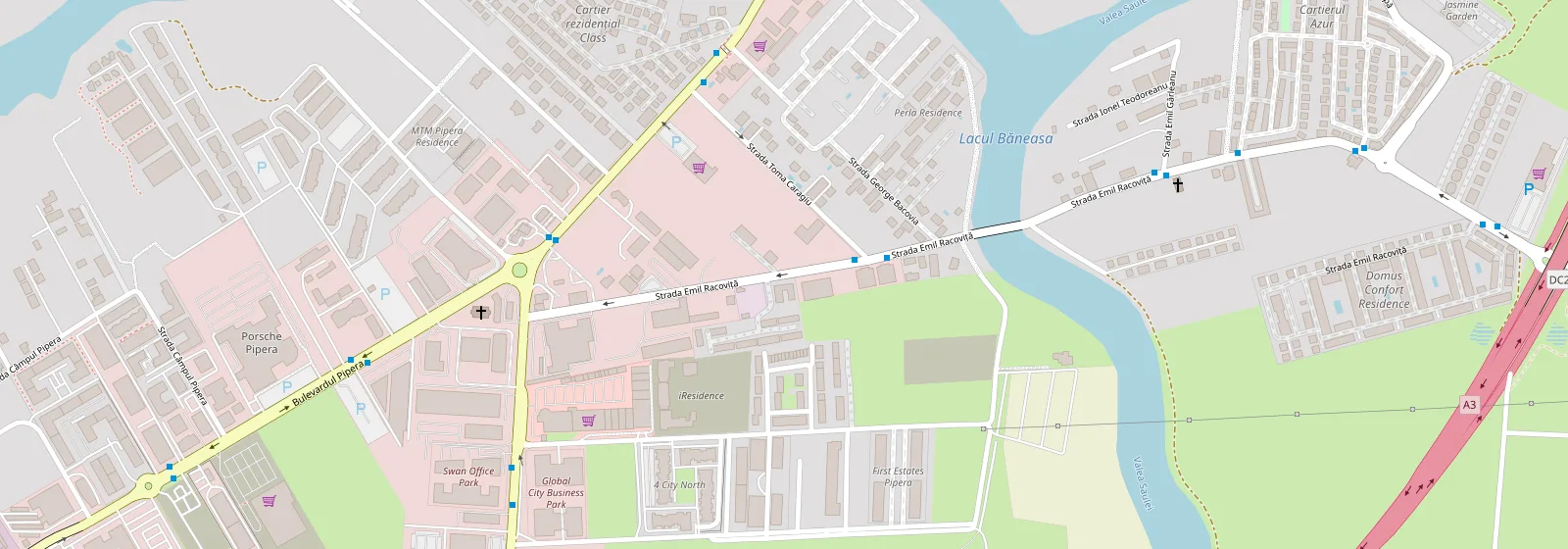
📍 Pipera, Str. Emil Racoviță 26
Dental CATTED Dental Clinic – Pipera