
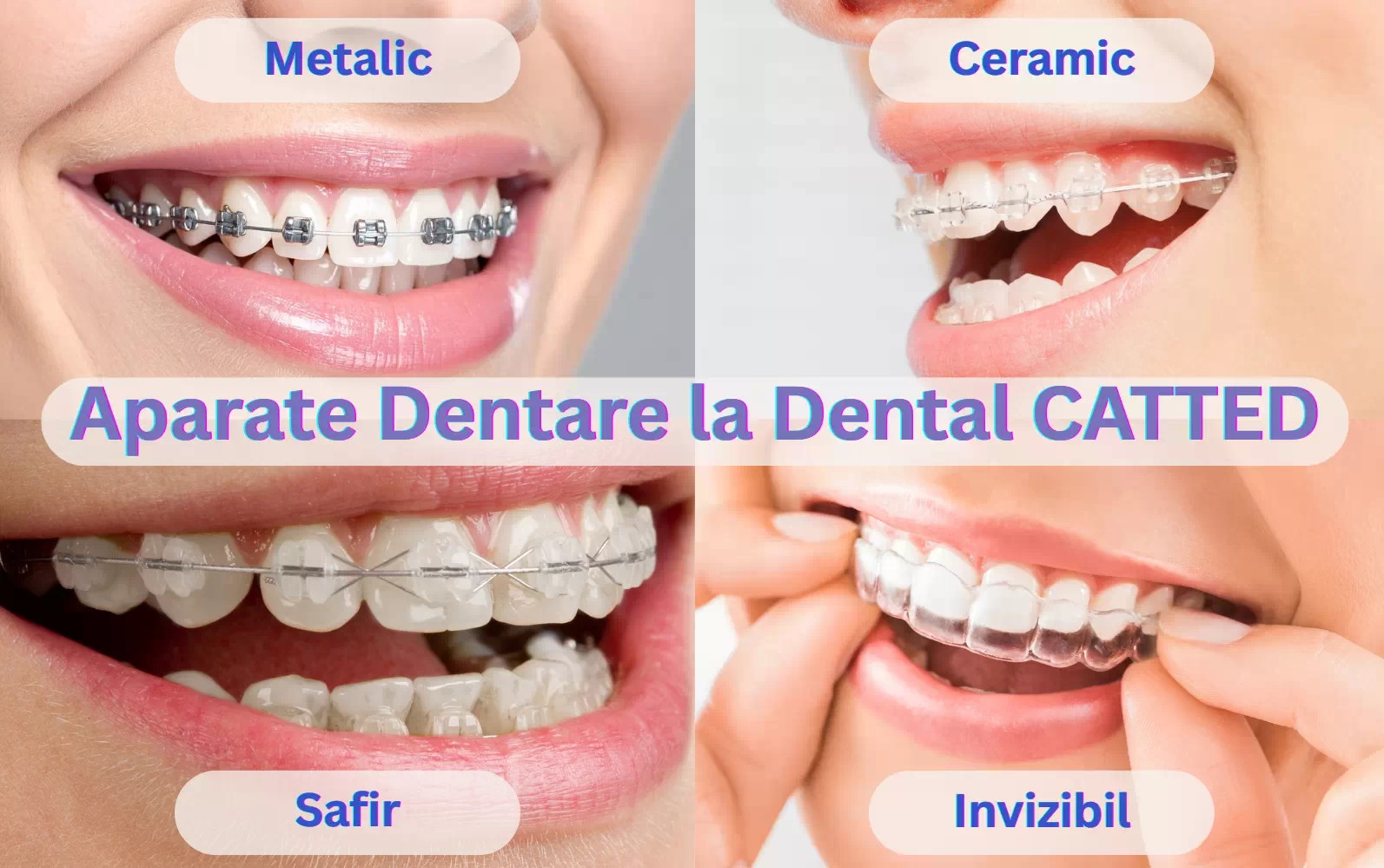
Choosing the right braces depends on your medical needs, your lifestyle and how discreet you want them to be. At Dental CATTED we offer all the modern options – from fixed braces (metal, ceramic, sapphire) to Spark clear aligners – so that we can personalize treatment for each patient.
In this guide we look at the pros and cons of each type, with a quick comparison and clear recommendations for children and adults.
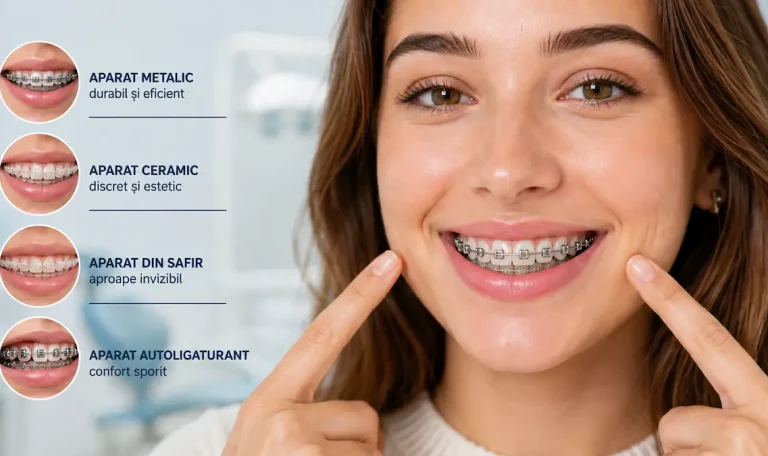
The 4 main types of braces in 2026
Metal braces (conventional)
Visibility: high
Comfort: moderate
Hygiene: requires careful brushing
Pros: highly effective in complex cases, very durable
Cons: highly visible, may cause minor irritation at first
Recommended if: speed matters to you, you are on a tighter budget or you have a difficult orthodontic case
Ceramic braces
Visibility: moderate
Comfort: good
Hygiene: be careful with strongly colored foods
Pros: natural look, highly effective, a good balance between price and aesthetics
Cons: slightly more fragile, can be affected by strongly colored foods
Recommended if: you want fixed braces that are less visible than metal ones, without premium costs
Sapphire braces
Visibility: very low (almost invisible)
Comfort: very good
Hygiene: easy to maintain
Pros: almost invisible, do not stain, very comfortable
Cons: higher cost, slightly more fragile than metal
Recommended if: you want aesthetic fixed braces that are hard to notice in photos or up close
Invisible braces (Spark Aligners)
Visibility: practically invisible
Comfort: very good
Hygiene: very easy (removable)
Pros: very discreet, taken out for meals and brushing, easy hygiene, a high level of comfort
Cons: require discipline (22h/day*), cannot treat every case on their own (for example, very severe ones)
Recommended if: you have an active social or professional life and want your treatment to go unnoticed
* The 22h/day recommendation is standard in aligner treatment. Aligners have to be taken out for meals and brushing, which adds up to about 2 hours a day. That is why 24h/day wear is not realistic.
Treatment duration
The total length of treatment with braces varies depending on the complexity of the case, the type of braces chosen and how closely each patient follows the orthodontist's recommendations. In general, correcting tooth alignment can take between 6 and 24 months, but simple cases may be finished sooner, while more difficult ones may need extra time. The orthodontist sets out a personalized plan after the initial assessment and monitors progress so that treatment can be adjusted along the way when needed.
Braces for children vs. adults
For children (6-14 years)
We usually recommend metal or ceramic braces – robust and effective;
Spark aligners are an option from age 11–12, if the child is disciplined;
We can combine them with removable appliances to guide jaw development.
For adults (18+ years)
70-80% of patients choose Spark for its discretion;
Sapphire – for discretion combined with the effectiveness of fixed braces;
Metal – for severe cases or when budget is a priority.
Note: Teenagers (14-18 years) are usually treated with the same types of braces as adults, depending on the complexity of the case.
How do we choose the right option? (3 key criteria)
Complexity of the case
Fixed braces are well suited to complicated cases. Spark aligners cover most moderate to complex cases.
Lifestyle
If you work with the public or have a lot of meetings, Spark aligners or sapphire fixed braces are the most discreet options.
Personal discipline
If you tend to forget things, fixed braces are the safer choice. Spark aligners only work effectively if they are worn 22h/day.
Frequently asked questions
1. Can I wear braces if I have crowns or bridges?
Only in certain situations. The orthodontist checks whether your existing restorations allow the teeth to move correctly.
2. Does correcting my bite help reduce headaches?
It can help when the headaches are related to an incorrect bite, but it does not replace a neurological assessment.
3. Is orthodontic treatment painful?
Only mild discomfort in the first few days or after adjustments, and this is easy to manage.
4. How long does the treatment take?
It depends on the complexity of your bite and the type of braces. The initial assessment gives you an estimated duration.
5. If I have just one of the 4 signs, do I need braces?
Not necessarily. Sometimes minor adjustments are enough, but an orthodontic assessment will confirm exactly what is needed.
Useful links
Book an appointment
A properly aligned smile is an investment in your long-term health. At Dental CATTED we use advanced digital technology and personalized plans for each patient.
Book a consultation at Dental CATTED by calling us at +40 733 22 88 28 or by filling out the contact form.
Together we will choose the right braces for your lifestyle and your budget. If you want to compare prices, see how much braces cost.