
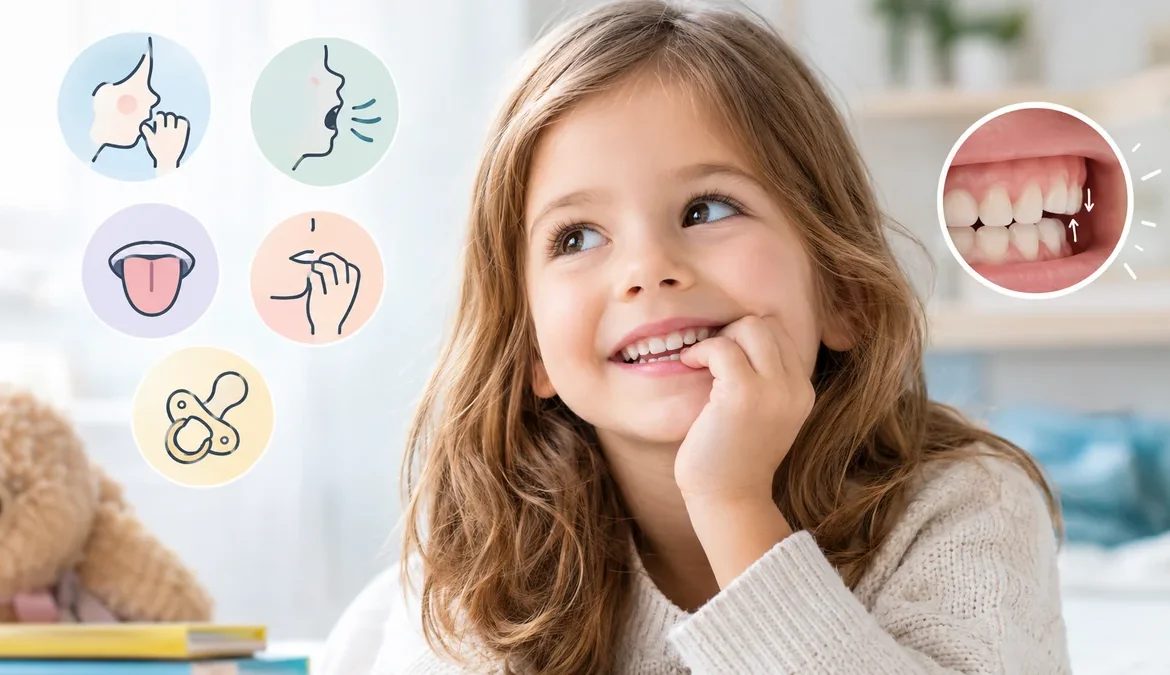
Sucking a thumb while falling asleep, sleeping with the mouth open, biting nails while watching cartoons. Almost every parent has seen at least one of these in their child.
Some of them go away on their own, without leaving a trace. Others, if they last for years, can change the way the jaws grow and the teeth line up. This doesn't mean every habit leads to braces for children, but it's worth knowing what to watch for and when to ask the dentist for an opinion.
Habits that affect children's teeth: why duration matters
Children's bones are growing and taking shape, and small pressures repeated every day can influence the direction in which they grow. Prolonged thumb sucking, frequently resting the tongue between the teeth, or breathing mostly through the mouth can, under certain conditions, influence the development of the teeth and jaws.
Three things matter: how long the habit lasts (months or years), how often it occurs (only during sleep or all day long), and how intense it is. Some changes may improve once the habit stops, especially if this happens early, before the permanent front teeth come in. However, not all of them correct themselves.
Thumb sucking and pacifiers
Sucking is a natural reflex in babies and it soothes them. Doctors generally recommend weaning gradually, by around age 2. If sucking continues past this age, especially frequently and intensely, changes in the bite may appear, such as:
- anterior open bite – the front teeth no longer touch when the child closes their mouth;
- upper teeth pushed forward, while the lower ones tilt inward;
- a narrower upper jaw, sometimes with a crossbite on one side.
A pacifier has similar effects, but it is usually easier to phase out gradually: you keep it only for sleep, then you give it up completely.
Mouth breathing
A child who constantly breathes through the mouth, not just when they have a cold, may have a problem that makes breathing through the nose harder, such as an allergy, enlarged adenoids or enlarged tonsils. Common signs are sleeping with the mouth open, snoring, dry lips and tiredness in the morning.
In some children who breathe mostly through the mouth, the tongue may rest lower. This pattern can be associated with a narrower upper jaw and changes in the bite. If mouth breathing persists, an ENT evaluation is worthwhile, and the doctor may also recommend an orthodontic consultation.
Tongue position and swallowing
At rest, the tongue usually sits up against the roof of the mouth. In some children, it stays pressed against the front teeth or pushed between them.
What matters most is where the tongue rests. A brief touch of the teeth when swallowing is usually not a problem, but a tongue that often pushes between the teeth may be associated with an open bite in the front. Sometimes there can also be difficulty pronouncing certain sounds, such as “s”, “z” and “ts”. If the dentist finds a problem, they may recommend tongue exercises, sometimes together with a speech therapist; whether braces are needed is decided case by case.
Lips, nails and objects in the mouth
- biting or sucking the lower lip can push the upper teeth forward and the lower teeth back;
- nail biting can wear down or chip the edges of the front teeth;
- chewing on pencils, toys or a shirt collar puts pressure on the same teeth, especially if it happens often.
Their effect depends on how often and how intensely they happen.
How to help your child quit
- talk to them calmly about the habit, without shaming or punishing, which usually only reinforces it;
- offer something else in the moments when it happens (boredom, tiredness, strong emotions): a toy to hold, a hug;
- praise the successful days, for example with a sticker calendar;
- at bedtime, for older children, a thin glove or a bandage on the finger can be a gentle reminder, if your little one accepts it and doesn't feel it as a punishment.
👉 If the habit is linked to stress or a big change (a new sibling, starting kindergarten), your child's sense of calm comes first, and the habit second.
If the habit continues or has started to change the teeth, the orthodontist evaluates the situation and recommends age-appropriate methods. Only in some cases do these include an appliance that helps your child quit.
When it's time for an orthodontic evaluation
The first orthodontic consultation is recommended around age 7, even if your child still has baby teeth. It's worth asking for an evaluation earlier if thumb sucking or pacifier use continues past age 3–4, if your child constantly breathes through their mouth, or if you notice that the front teeth no longer touch.
You can also read about the signs and key ages in our article on at what age a child needs braces. And if your little one hasn't been to the dentist yet, preparing for their first visit to the dentist makes later checkups easier.
Frequently asked questions (FAQ)
Until what age is a pacifier OK?
Dentists usually recommend gradually giving it up by around age 2. If your child still uses it often after age 2, talk to the dentist at the next checkup.
Do the teeth straighten on their own after a child stops thumb sucking?
Sometimes, yes, especially if they stop early, before the permanent front teeth come in. How things evolve depends on how significant the change is and how long the habit lasted. If the changes are more significant or persist after the habit stops, an orthodontic evaluation will show whether treatment is needed.
Are “orthodontic” pacifiers better for the teeth?
There is no clear evidence that a particular pacifier shape prevents alignment problems. What matters more is how long and how often your child uses it.
My child snores and sleeps with their mouth open. Is this related to the teeth?
It may be. The cause is often related to the nose, adenoids or tonsils, so an ENT evaluation is a good first step. The orthodontist can then check whether the teeth and jaws are affected.
Small habits, monitored early
When you notice habits that affect children's teeth, what matters is how long they last and how often they happen. Many go away on their own or can be stopped with patience, without pressure. When a habit continues past preschool age or you notice changes in the teeth, an early evaluation shows whether simple monitoring is enough or orthodontic treatment is needed.
Book an orthodontic consultation for your child and find out whether their habits need attention.
📞 Call 0733 22 88 28
📩 Or fill out the contact form in the sidebar and we'll call you back as soon as possible.
📍 Pipera, Str. Emil Racoviță 26
Dental CATTED Dental Clinic – Pipera