
A dental implant is never placed “at the first visit”. Before the procedure, the dentist needs a full assessment of both your general health and your oral health – otherwise the risks increase and the chances of a predictable, long-lasting treatment go down. The tests needed before a dental implant are not a bureaucratic formality; they are the step that makes the difference between a safe treatment and one with complications.
If you are preparing for an implant and want to know exactly what comes next, this article explains step by step which investigations are needed and why each of them matters.
Why these tests are needed
A dental implant is, essentially, a surgical procedure. As with any surgical procedure, the dentist needs to know in advance what bone structure they are working with and whether your general health allows normal healing.
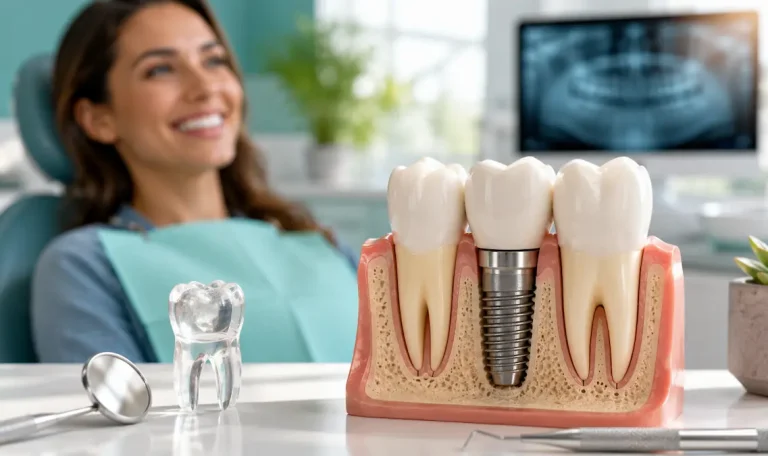
Without a full assessment, the risks increase significantly: incorrect implant positioning, damage to important anatomical structures (nerves, sinuses) or failed osseointegration. Pre-implant tests reduce these risks and allow the dentist to draw up a treatment plan tailored precisely to your case.
The 3D X-ray – the basic investigation for any implant
The first and most important step is imaging. A conventional 2D X-ray only provides a flat image, which is not enough to plan an implant.
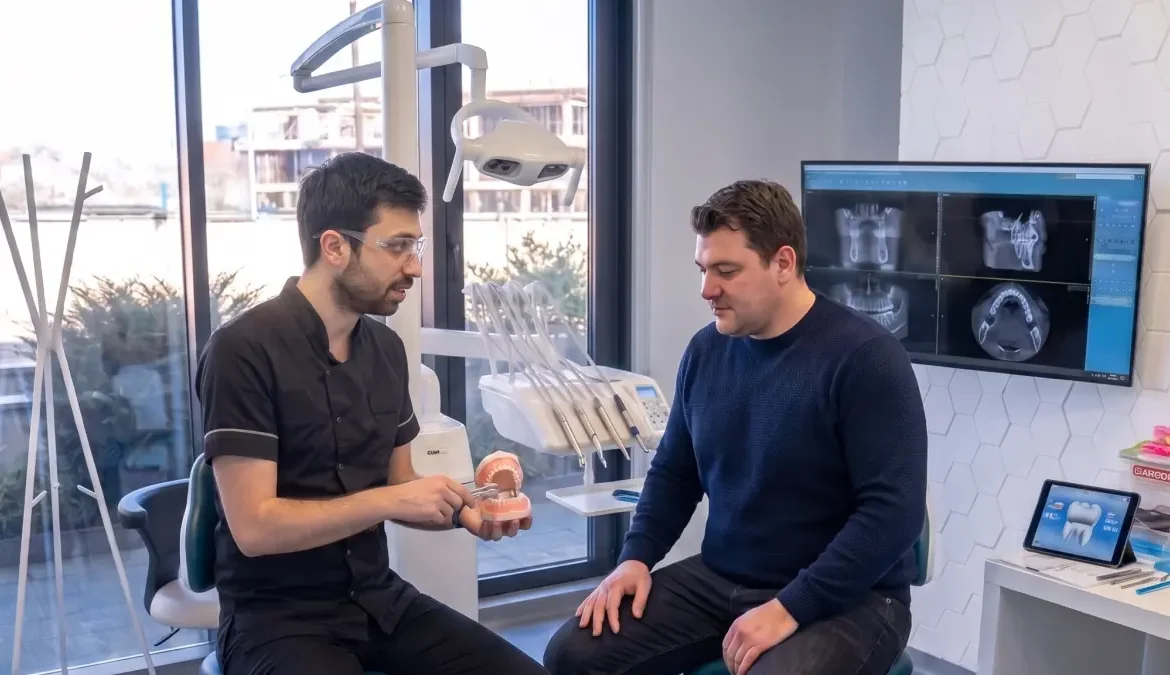
The 3D X-ray, also known as CBCT (Cone Beam Computed Tomography), creates a three-dimensional map of the jaw. This makes it possible to simulate the implant position before the procedure and reduces the risk of surprises during surgery. With it, the dentist can see exactly:
- the amount and density of available bone in the area where the implant will be placed;
- the position of the nerves and sinuses, to avoid any accidental contact during the procedure;
- the right angle and depth at which the implant should be inserted.
👉 The 3D X-ray is not an optional test in implantology – it is the basic investigation without which surgical planning cannot be done safely.
How the results are interpreted and what comes next
CBCT results are not just images – they form the basis of the whole diagnostic process. The dentist analyzes the bone structure, identifies any hidden problems – infections, cysts, root fractures – and decides whether you can go straight to the procedure or whether a preparatory stage is needed.
This interpretation is what turns a simple radiological image into a personalized treatment plan, with the exact position of each implant decided in advance.
Blood tests and assessment of your general health
Besides imaging, the dentist needs a clear picture of your general health. Depending on your medical history and the complexity of the procedure, the dentist may recommend:
- a complete blood count (CBC) – for an overall picture of your health;
- a coagulation profile – essential before any surgical procedure, to assess the risk of bleeding;
- blood glucose – poorly controlled diabetes can affect healing and the integration of the implant.
Patients with chronic conditions (diabetes, cardiovascular disease, clotting disorders) or those taking anticoagulants or bisphosphonates should discuss their full medical history openly with the dentist. This information may change the treatment plan, but it rarely rules out an implant altogether.
Bone assessment – how much bone you have available
One of the most important pieces of information obtained from the CBCT is the amount of available bone. If the bone has resorbed significantly after a tooth was lost – a process that starts in the first months after extraction and continues gradually over time – a bone augmentation or sinus lift procedure may be needed before the implant is placed.
In cases with extensive bone loss or a whole arch without teeth, a single implant may no longer be the most effective solution. In these cases, the dentist may suggest asolution for complete tooth loss such as the All-on-4 system, which makes more efficient use of the remaining bone.
When an additional surgical assessment is recommended
In more complex cases – significant bone deficiency, proximity to the maxillary sinus or the inferior alveolar nerve, or post-traumatic situations – the initial assessment is complemented by an oral surgery consultation. This is where it is decided whether a preparatory procedure is needed before the implant itself and how it will be planned.
Frequently asked questions (FAQ)
Which tests are mandatory before a dental implant?
The 3D X-ray (CBCT) is the mandatory investigation for any implant, regardless of how complex the case is. It is usually accompanied by general blood tests – complete blood count, coagulation profile, blood glucose – and a review of your full medical history. The dentist may recommend additional investigations depending on your pre-existing conditions.
Is the 3D X-ray painful or risky?
No. The investigation does not require anesthesia, is usually well tolerated and takes only a few minutes. As for safety, CBCT uses a lower radiation dose than a conventional medical CT scan, making it a safe investigation when recommended by a doctor.
Can I have an implant if I take anticoagulants?
In many cases yes, but anticoagulant treatment must be discussed with the dentist before the procedure. Sometimes the dose needs to be adjusted temporarily, in cooperation with the doctor who prescribed the treatment. Never stop anticoagulant treatment on your own without medical advice.
Does diabetes stop me from having a dental implant?
No, but uncontrolled diabetes increases the risk of complications and can affect healing. When blood glucose is well controlled, patients with diabetes generally have success rates similar to those of patients without the condition. The dentist will assess your blood glucose level and adapt the treatment plan accordingly.
How long before the implant should the tests be done?
As a rule, the tests are done a few days to a few weeks before the procedure, depending on the type of investigation. The 3D X-ray remains valid for longer, while blood tests may need to be repeated if the procedure is postponed significantly.
What happens if the tests show I do not have enough bone for an implant?
It does not automatically mean the implant is impossible. Depending on the degree of bone deficiency, the dentist may recommend bone augmentation, a sinus lift or, in cases of extensive loss, an alternative solution such as a fixed restoration supported by several implants. The decision is always made after a full assessment of your case.
The right tests make the difference
Tests before a dental implant are the foundation of a safe and predictable treatment, not a bureaucratic obstacle. From the 3D X-ray to the general health assessment, each step contributes to a treatment plan personalized for your case.
For more complex cases that need bone augmentation or other preparatory procedures, a surgical assessment is also carried out.
Book a consultation and find out which tests you need before a dental implant.
📞 Call +40 733 22 88 28
📩 Or fill out the contact form in the sidebar and we will call you back as soon as possible.
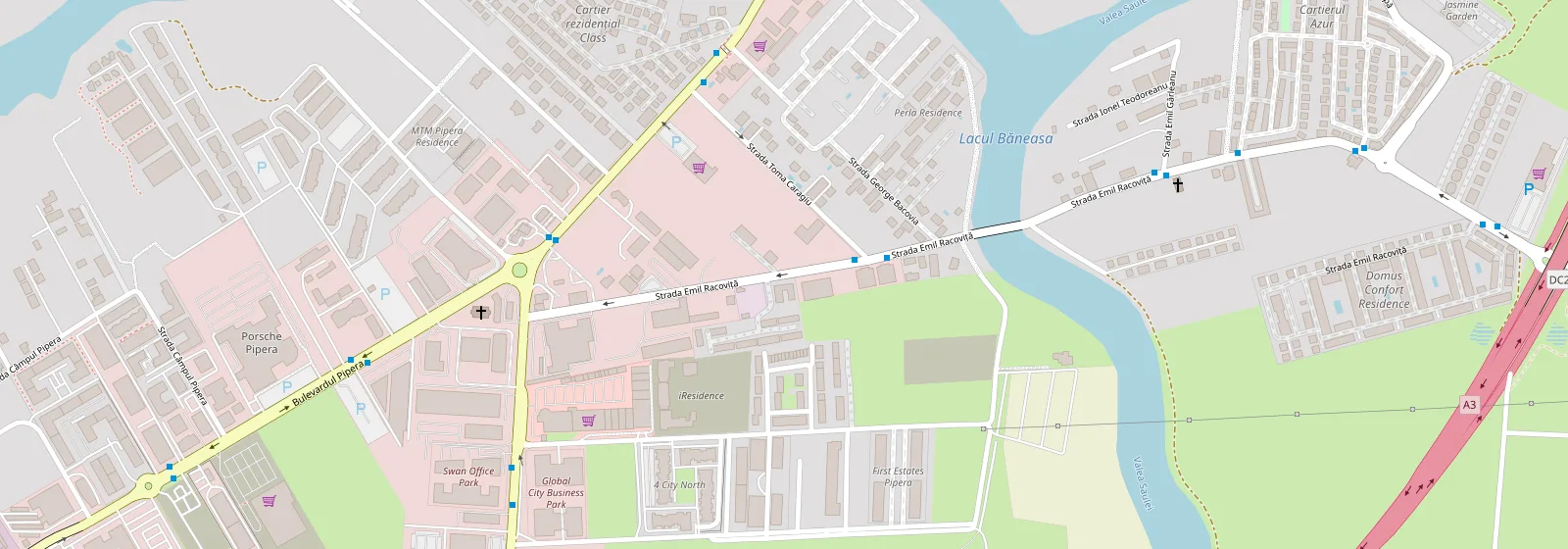
📍 Pipera, Str. Emil Racoviță 26
Dental CATTED Dental Clinic – Pipera