
“How long do I need to wear braces?” is one of the first questions patients ask.
Although it seems there should be a simple answer, the reality is more nuanced. In some cases we are talking about roughly a year, in others two or even three years. The difference is neither accidental nor arbitrary.
The duration depends on how the teeth need to be repositioned, on the complexity of the bite and on the body’s biological response. In other words, no two treatments are identical, even if the cases may look similar at first sight.
The role of braces in straightening your teeth
Braces are not an end in themselves, but the tool through which the orthodontist can control how the teeth move.
By applying light, constant forces:
- the teeth are gradually guided into the correct position;
- bite imbalances are corrected;
- chewing forces are distributed more evenly.
👉 If you want to understand the options available, you can read about straightening teeth with braces.
It is a biological process, not a mechanical one. Teeth do not “move” instantly; they go through a process of bone remodeling that takes time and monitoring.
How long braces need to be worn, in reality
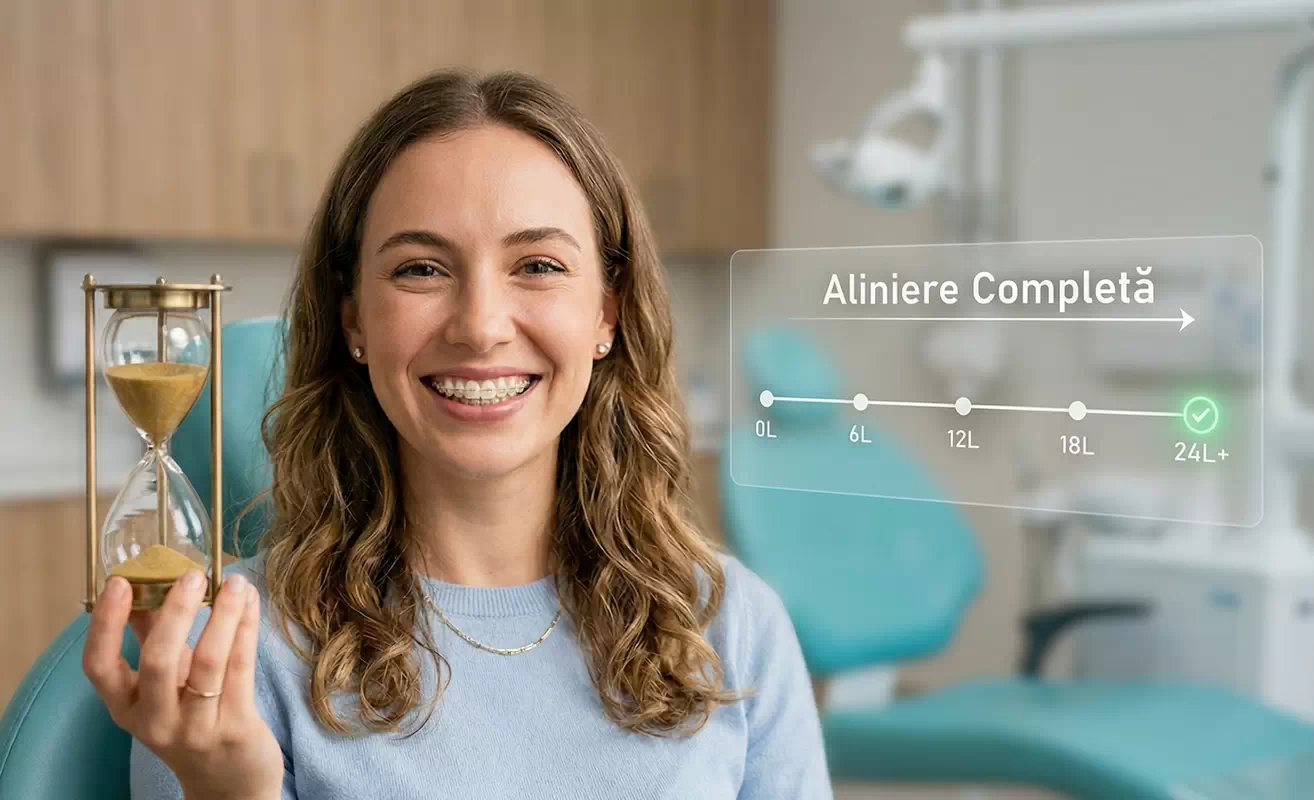
In practice, there are a few rough guidelines:
- mild cases: 6–12 months;
- moderate cases: 12–24 months;
- complex cases: 24–36 months.
Most patients fall between 12 and 24 months.
These ranges are not fixed rules. They reflect clinical experience, but the exact duration can only be established after a detailed assessment.
What matters is to understand that treatment does not end when the teeth “look good”, but when their position is stable and functional.
Why the duration differs from one patient to another
Differences in duration are normal and have clear explanations:
The initial complexity
- minor crowding → quicker correction;
- incorrect bite → longer treatment.
If you are not sure which situation applies to you, you can check the signs that your bite needs correcting.
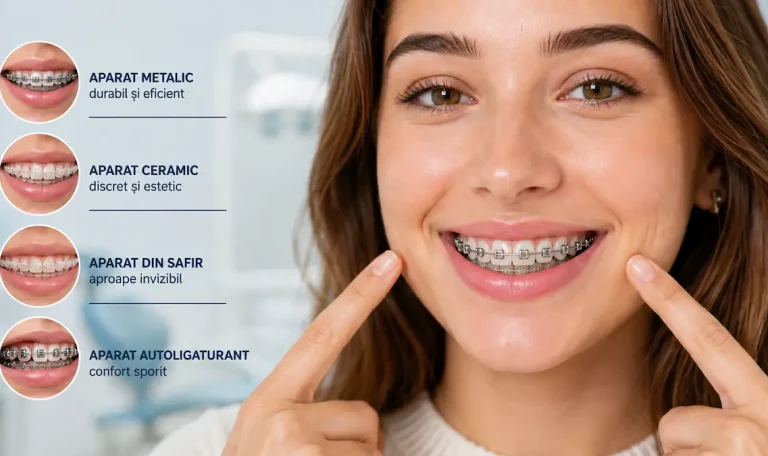
The type of braces
- metal → offers very good control in complex cases;
- ceramic or sapphire → aesthetic, with similar effectiveness;
- aligners → require constant discipline.
👉 See the differences between the types of braces.
The patient’s age
In teenagers the process is faster, because the bone is more responsive.
In adults, tooth movement may be slightly slower, but the results are comparable.
The patient’s cooperation
A decisive factor:
- attending checkups;
- wearing elastics;
- good oral hygiene.
A lack of cooperation can significantly lengthen the treatment.
Why some patients finish in 12 months and others in 36
This difference is one of the most important things to understand.
A patient with minor crowding and a correct bite may only need fine adjustments. By contrast, a patient with a deep bite or a reverse bite needs complex corrections involving several stages.
In addition, the biological response differs. In some patients the teeth move more quickly, while in others the process is slower but more stable.
👉 This explains why general estimates must always be confirmed by a personalized plan.
How treatment progresses over time
Orthodontic treatment progresses in stages:
The initial consultation
- clinical assessment;
- X-rays;
- drawing up the treatment plan.
Fitting the braces
The chosen system is fitted and the straightening process begins.
Periodic adjustments
- checkups every 4–6 weeks;
- adjustments to the forces applied.
The retention phase
Once the braces are removed:
- a retainer tray or a fixed retainer;
- maintaining the result.
👉 Without this stage, the teeth can gradually move back to their original position.
Costs and how they relate to duration
The cost of treatment is influenced by several factors:
- the type of braces;
- the complexity of the case;
- the estimated duration.
For a rough idea, you can check our prices for braces.
The final cost is set according to a personalized plan, tailored to your needs. For a comparison by type of braces, see also how much braces cost.
How you can shorten your treatment
There are a few things that can make a difference:
- keep all your appointments;
- follow your orthodontist’s instructions;
- keep up thorough oral hygiene;
- avoid foods that can damage the braces.
The patient’s involvement directly influences how treatment progresses.
Frequently asked questions (FAQ)
How long do you need to wear braces?
The duration generally varies between 12 and 24 months, but it can be shorter or longer depending on the complexity of the case. The initial position of the teeth, the type of bite and the treatment goals significantly influence this period. An exact estimate can only be made after a consultation, where the orthodontist analyzes all these aspects.
Can the time spent wearing braces be shortened?
The duration can be optimized if you follow your orthodontist’s instructions and attend regular checkups. Wearing elastics and good hygiene help treatment progress more efficiently. However, tooth movement has biological limits, and rushing it too much can harm the teeth and the stability of the result.
Does treatment take longer in adults?
In general, the process can be slightly slower in adults, because the bone is denser and reacts differently to the forces applied. Even so, the differences are not major in most cases, and the results can be just as good. With a correct plan and careful monitoring, the duration remains predictable.
What happens if I don’t go to my checkups?
Missing checkups can delay treatment and affect the final result. Adjustments are not made in time, and progress becomes less predictable. In some cases complications may arise, or the treatment period may need to be extended to correct the deviations that have occurred.
Can the teeth move again after the braces come off?
Yes, if the retention phase is not followed. After the braces are removed, special appliances need to be worn to maintain the result. This stage is essential for long-term stability and is an integral part of the treatment.
Book a consultation
If you want to find out how long you need to wear braces in your case, a specialist assessment is a reliable first step.
During the consultation you will find out:
- the estimated duration;
- the right type of braces;
- the steps needed for stable results.
At Dental CATTED, every treatment plan is personalized.
Book a consultation and find out exactly what to expect.
📞 Call +40 733 22 88 28
📩 Or fill out the contact form in the sidebar and we will call you back as soon as possible.
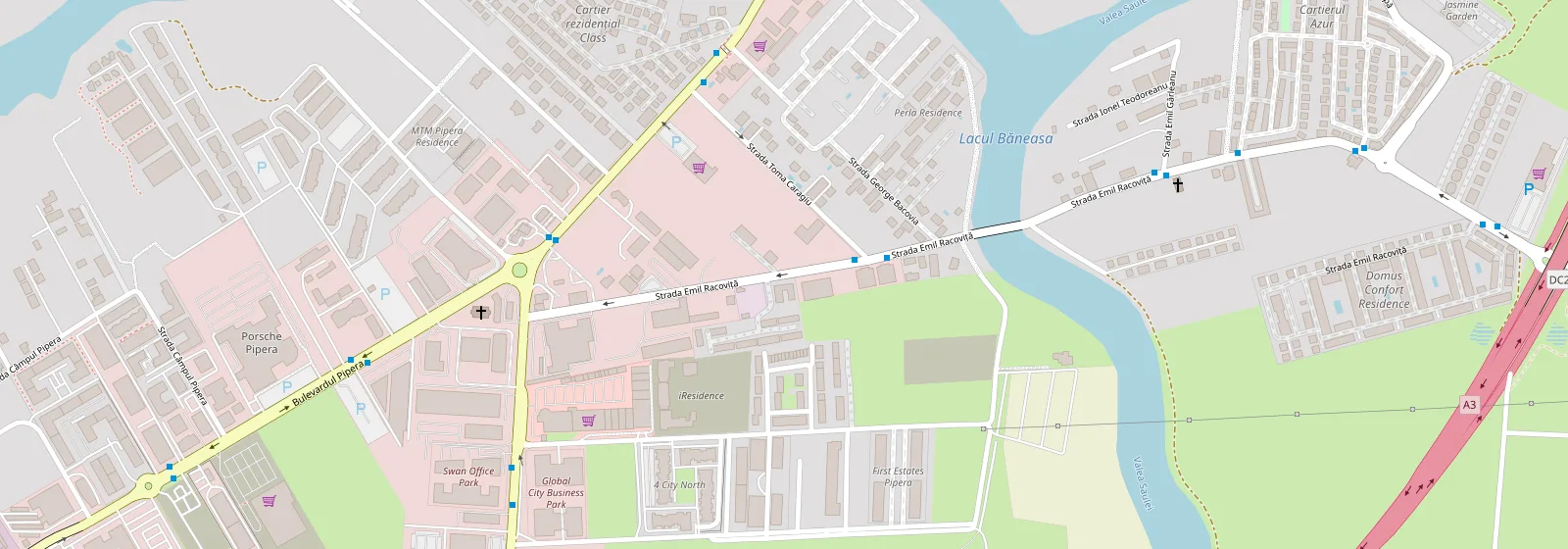
📍 Pipera, Str. Emil Racoviță 26
Dental CATTED Dental Clinic – Pipera